Open or enclosed car transport within Europe
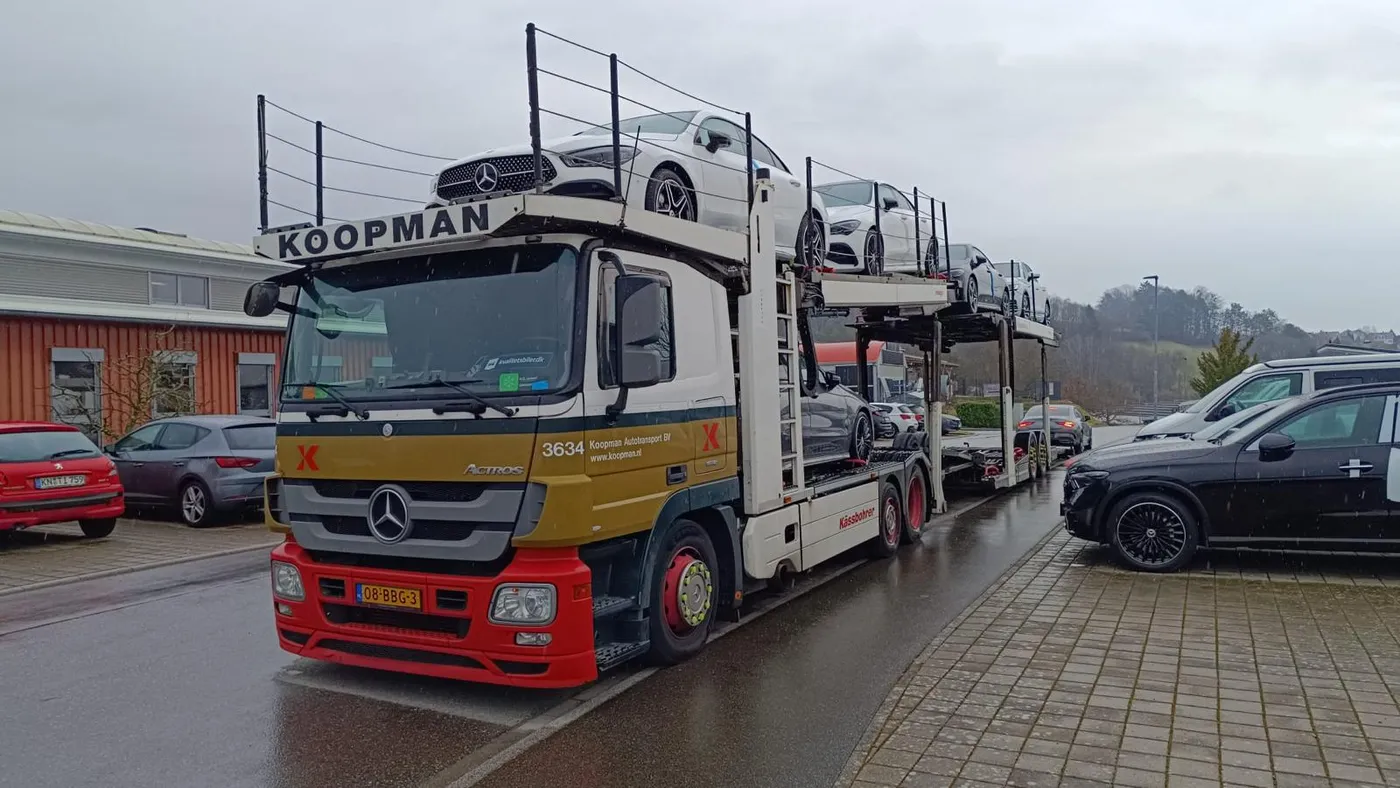
Inside Europe most vehicles travel on an open car transporter. It is the trade standard, carries up to nine vehicles depending on the body and is therefore the cheapest per unit. The downside: the vehicle is exposed to weather and stone chips, and groupage loads need a time window rather than a fixed day.
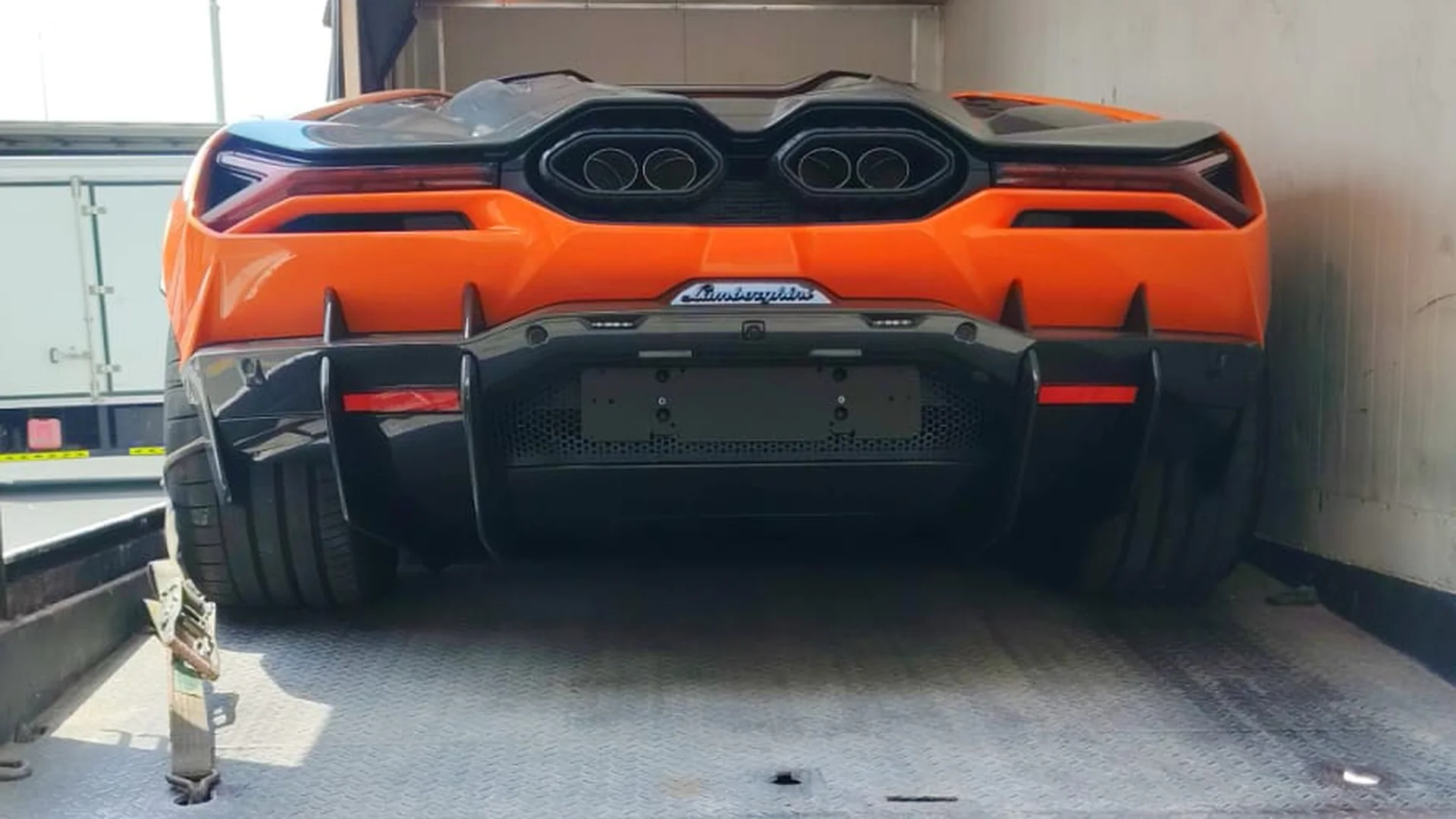
Enclosed transport carries the vehicle in a box, protected from weather, dirt and prying eyes. It costs more and pays off for valuable, rare or freshly detailed vehicles, and for clients who want no visibility. For sports cars with little ground clearance we use shallow ramps or a lift.
- Open groupage transport for standard vehicles
- Enclosed single transport for high-value vehicles
- Shallow ramps for lowered vehicles
Sea freight: container or RoRo
For destinations outside Europe the route nearly always runs by sea freight. There are two methods. In the RoRo method the vehicle drives itself onto a car carrier and is lashed down on board. It is cheaper and clears faster, but the vehicle is accessible during the voyage and must be roadworthy.
In a container the vehicle travels enclosed and sealed. A 40 foot container holds two to four vehicles depending on size, which makes it economical from several units upwards. Personal belongings may only travel if they are on the customs declaration. We document the condition before loading with photographs and a written record.
- RoRo: cheaper, the vehicle must be roadworthy
- Container: protected, ideal from two vehicles upwards
- Photographic condition report before loading
Shipping a car by air freight when the deadline counts
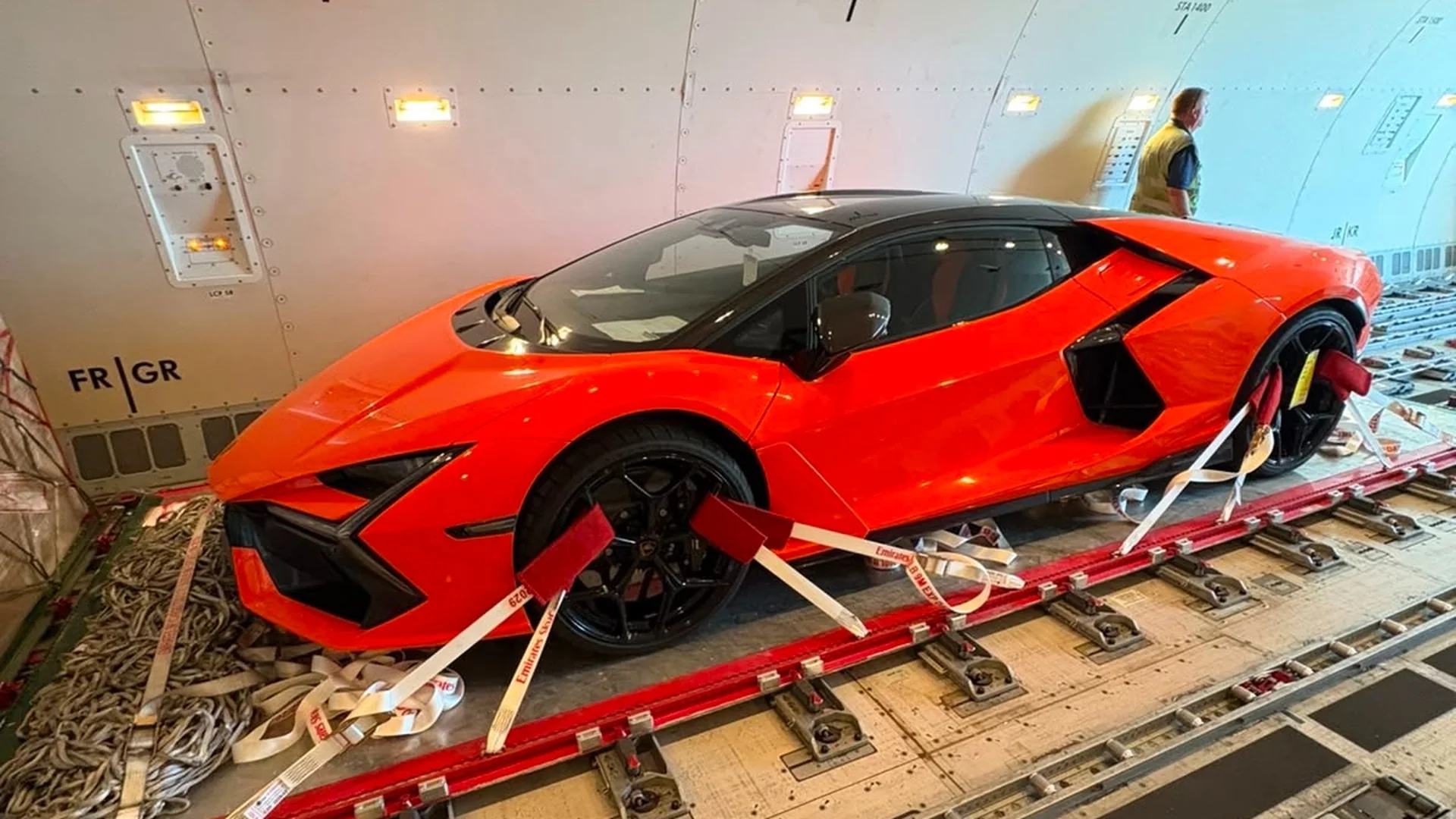
The photograph above is not a brochure shot: a vehicle in the hold of a freighter, lashed to the pallet and secured for the flight to the Gulf. That is exactly how an air transport runs. Air freight is the fastest way to get a vehicle to its destination and costs several times what sea freight does.
It pays off in three cases. When a fixed date is waiting at the destination, a handover or a show. When the vehicle is valuable enough that several weeks at sea would be a risk. And when a buyer simply will not wait, which happens regularly with special series and limited sports cars.
From Frankfurt there are regular cargo connections to Dubai, Doha and Riyadh. From Lake Constance the vehicle reaches the airport in a few hours. We handle delivery to the terminal, the booking with the airline and customs clearance before departure.
Air transport of a vehicle comes with stricter requirements than sea freight. The tank may only be partly filled, the battery is disconnected or secured depending on the airline, and the vehicle is fixed to a pallet and strapped down. We prepare all of that so the handling does not stall over a detail and the booked flight does not leave without the car.
- Cargo connections from Frankfurt to Dubai, Doha and Riyadh
- Delivery in days rather than weeks
- Preparation to airline requirements, lashing and palletising
- Customs clearance before departure included
Rail and road within Europe
On long European routes rail can be an alternative to the road, especially for several vehicles on the same axis. For single vehicles the lorry usually stays faster and more flexible, because it runs door to door and needs no transhipment.
Our location at Lake Constance sits on the A81 motorway, in the corridor towards Switzerland, Italy and southern France. Milan, Zurich, Lyon and Vienna are one-day destinations. For Scandinavia, Spain or eastern Europe we plan two to three days, depending on driving hours and groupage.
- Rail makes sense for several vehicles at once
- Lorry door to door without transhipment
- One-day runs from Lake Constance: Milan, Zurich, Lyon, Vienna
Insurance and condition documentation
A carrier's liability under CMR is capped by weight, not by vehicle value. On a 100,000 euro vehicle that liability covers a fraction of the loss. For valuable vehicles we therefore recommend a transport insurance at the actual value.
Before every loading we document the condition: photographs all round, interior, wheels, odometer. The record goes to you before the vehicle departs. If damage occurs in transit it is then clear when it happened. Those five minutes save weeks in a dispute.
- CMR liability does not cover high vehicle values
- Transport insurance at the actual value
- Photographic record before every loading
Dates, transit times and what affects them
We give transit times as a range and not as a promise. A road transport within Europe is easy to plan, a sea freight depends on sailing dates, transhipment ports and clearance at the destination. Anyone who promises fixed days is promising something they do not control.
What we do control, we keep: collection date, condition report, papers at loading and a call as soon as something changes. You hear about a delay from us rather than by asking. The customs side of the transport is covered on our customs clearance page.
- Transit times as a realistic range
- One contact person for the whole transport
- Active notification when things change