Who can buy net for export to a non-EU country
Companies from non-EU states buy net once they present a company document from their country. In the United Arab Emirates that is the trade licence, in Qatar the commercial registration extract, in Switzerland the commercial register entry. We tell you in advance which document counts as proof in your country.
Private individuals from non-EU countries can also buy net. That is the key difference from an intra-community acquisition, where private buyers have no such route. One condition applies though, and it is often overlooked. It is in the next section.
- Companies with a company document from the destination country
- Private individuals with passport or ID card
- No VAT identification number required
The six month and 6,000 kilometre rule for private buyers
When a private individual buys net for export to a non-EU country, the vehicle must not count as a new vehicle under VAT law. A vehicle counts as new if it was first registered less than six months ago or has covered fewer than 6,000 kilometres.
Both thresholds have to be passed. A vehicle registered eight months ago with 3,000 kilometres still counts as new, and so does one registered four months ago with 20,000 kilometres. Only when the vehicle is older than six months and has more than 6,000 kilometres is a net purchase possible for a private buyer. We check this against the registration document and the odometer before we quote.
- First registration more than six months ago
- Mileage above 6,000 kilometres
- Both conditions must be met at the same time
Switzerland is a non-EU country and it starts on our doorstep
From our base in the district of Konstanz the Swiss border is minutes away. For export purposes Switzerland counts as a non-EU country despite sitting in the middle of Europe, because it belongs neither to the EU nor to the customs union. The same rules apply as for an export to Qatar or the Emirates.
In practice that means an export declaration with German customs, clearance at the border and then import clearance in Switzerland with VAT and, where applicable, the automobile tax. Knowing the sequence saves waiting time at the crossings. We agree the customs office and the slot in advance instead of turning up and hoping.
- Export declaration in Germany, import clearance in Switzerland
- Customs office and time slot agreed in advance
- Short distances from Volkertshausen and Singen
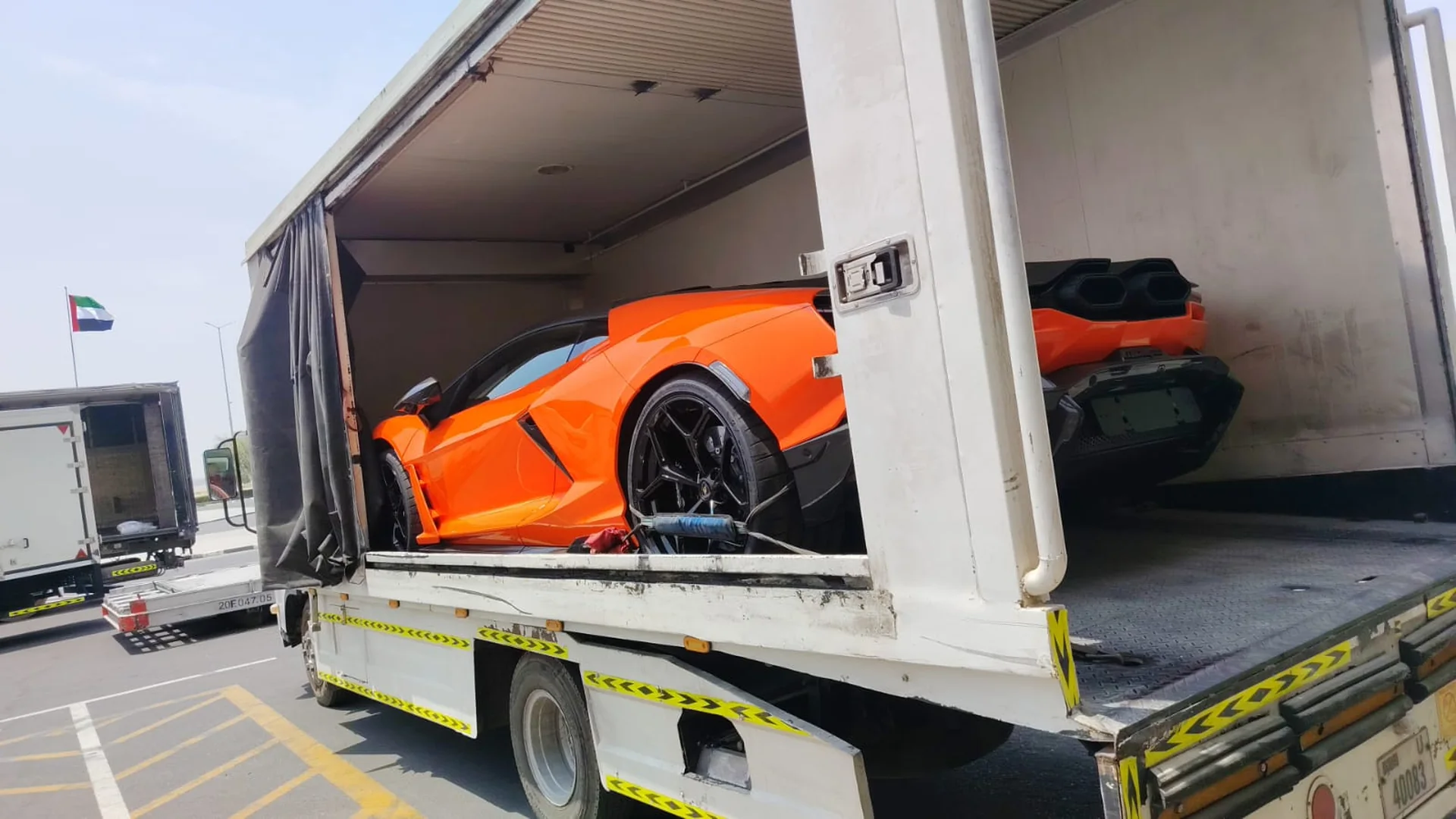
Export to the Gulf: Qatar, the UAE, Saudi Arabia and Kuwait
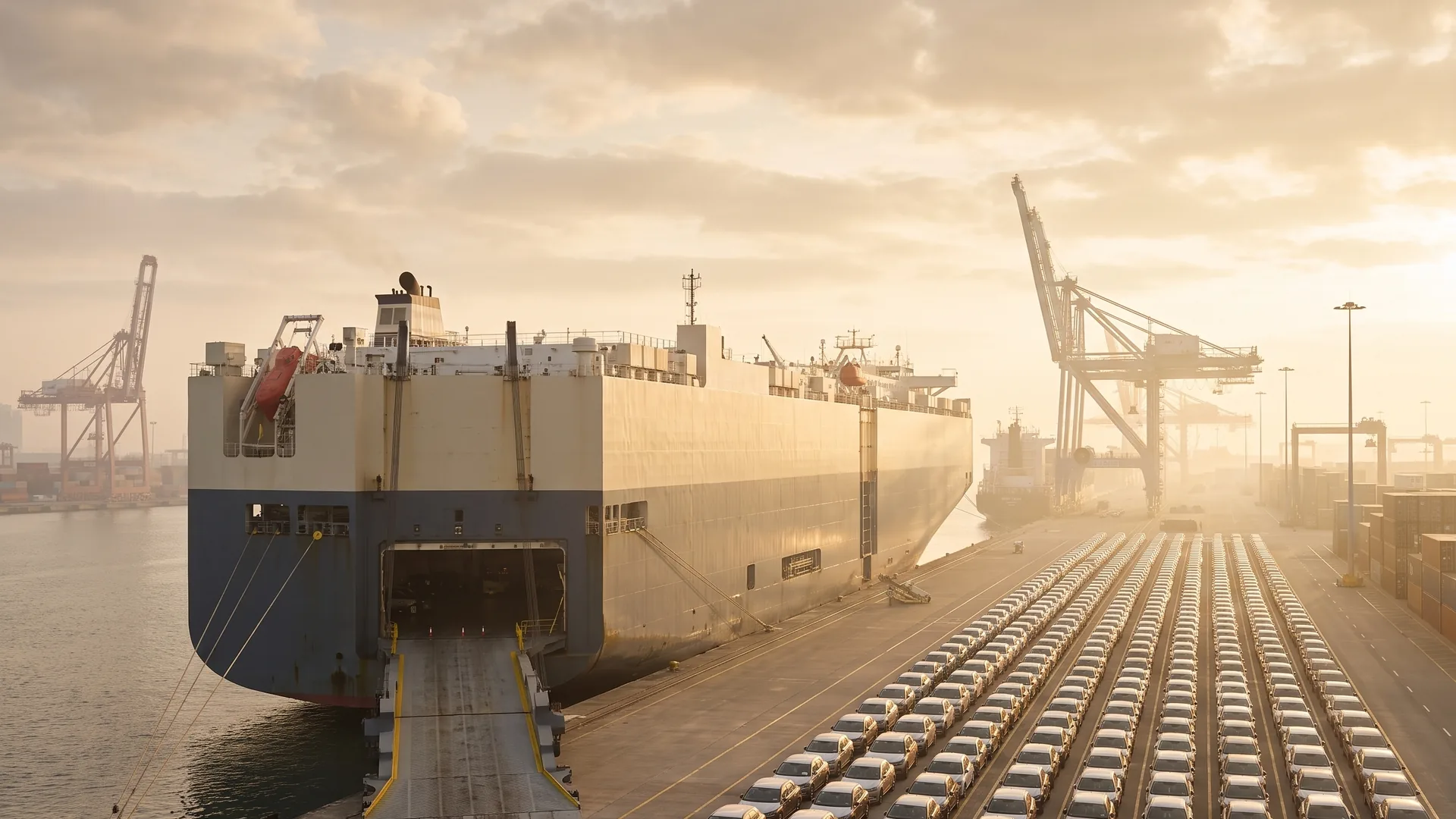
The Gulf states are our most frequent destination outside Europe. Vehicles travel by sea freight through the major North Sea ports, or by air freight from Frankfurt when time is short. Which one fits is decided by the deadline and the vehicle value, not by a fixed rule.
Every destination has its own import rules. Some countries require a certificate of conformity, others cap vehicle age or prescribe a pre-shipment inspection. We work through these points before the purchase so the vehicle does not end up sitting at the port waiting for a document that would have taken two minutes in Germany.
- Sea freight in a container or by RoRo
- Air freight from Frankfurt for urgent deliveries
- Advice on the import rules of the destination country
Proof of exit instead of proof of arrival
For a non-EU export the proof of exit replaces the intra-community proof of arrival. It is generated automatically from the electronic export declaration in the ATLAS system: once the customs office of exit confirms that the goods have crossed the border, the system issues the exit confirmation.
That document is the only solid evidence for the exemption. We file the declaration, monitor the exit confirmation and send you a copy for your records. Our customs clearance page sets out how the process works in detail.
- Electronic export declaration in the ATLAS system
- Exit confirmation as evidence of the exemption
- Copies of every document for your accounts
What awaits you in the destination country
Exemption in Germany does not mean no charges at all. In the destination country import duty and import VAT are normally levied, in some countries a vehicle or luxury tax on top. The amount is based on the customs value, not on the original list price.
We do not calculate those costs for you, because they depend on your status locally and can change. What we do is name the items that typically arise and supply documents your customs agent can work with. On request we issue a EUR.1 movement certificate where a preferential agreement exists between the EU and your country.
- Import duty and import VAT in the destination country
- EUR.1 where a preferential agreement applies
- Documents in the form your customs agent needs